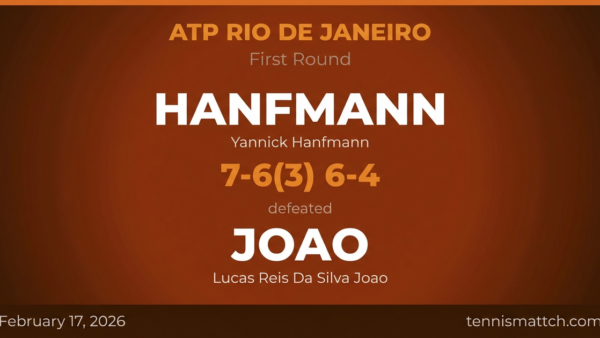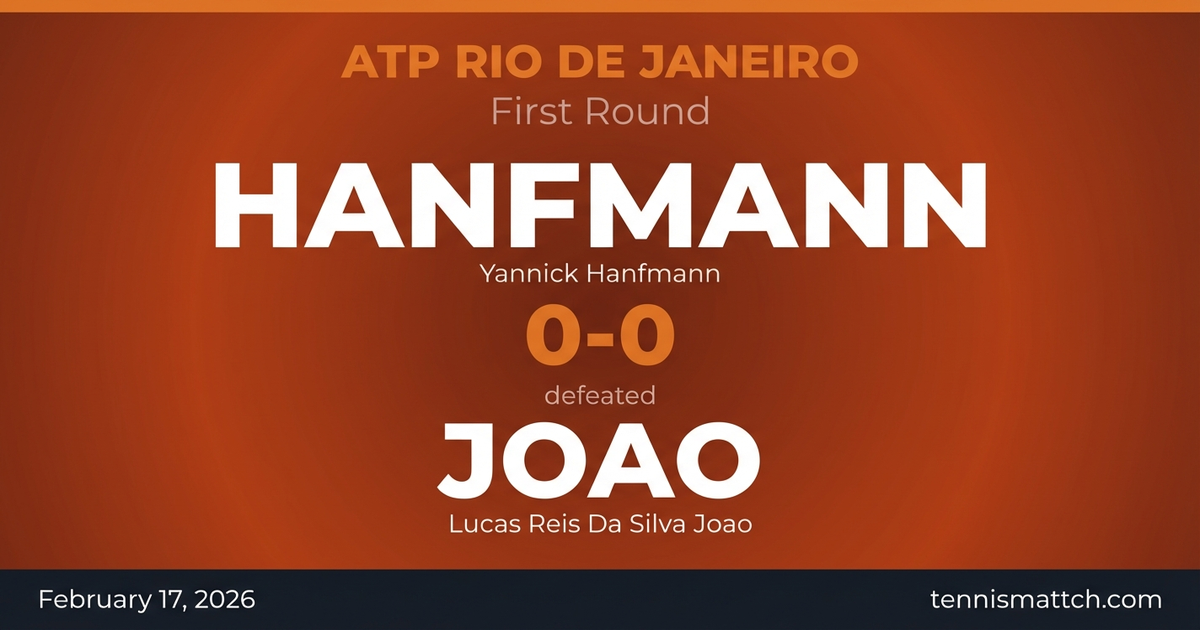


Yannick Hanfmann takes on Lucas Reis Da Silva Joao in the first round of the ATP Rio de Janeiro on February 17, 2026. The clay-court encounter represents a first career meeting between the experienced German journeyman and the Brazilian contender, setting up an intriguing opener with contrasting profiles and motivations.
Hanfmann brings tour-level consistency to Copacabana, having spent years navigating both ATP and Challenger circuits with solid baseline tennis. Reis Da Silva Joao arrives with home-court advantage and the hunger of a player building his resume on familiar South American clay. Without a head-to-head history to mine for patterns, both players enter with tactical flexibility but minimal scouting reports.
The surface context matters considerably. Clay in Rio favors patient ralliers who can construct points and adjust to humid, slower conditions. Hanfmann’s left-handed topspin forehand could prove effective on the red dirt, while Reis Da Silva Joao will draw energy from local support and his comfort level in Brazilian conditions.
Key Takeaways
- No H2H history creates tactical uncertainty — both players lack specific matchup blueprints and must rely on general game plans rather than opponent-specific adjustments.
- Home-court advantage could tilt momentum toward Reis Da Silva Joao, who benefits from familiar conditions, local crowd support, and comfort playing South American clay swing events.
- Hanfmann’s tour experience represents a critical edge — his years competing at ATP level provide mental composure and match management skills that often prove decisive in first-round encounters.
- Clay-court consistency will determine the outcome — the player who minimizes unforced errors while capitalizing on short balls should control baseline exchanges in humid Rio conditions.
Player Analysis
Yannick Hanfmann
The 32-year-old German left-hander arrives in Rio with the steady professionalism that has defined his career. Hanfmann’s game revolves around reliable baseline consistency, using his forehand as both a rally stabilizer and setup shot. His left-handed serve, while not overpowering, creates uncomfortable angles on clay, particularly out wide in the deuce court. What Hanfmann lacks in explosive weapons, he compensates with tactical intelligence and the ability to grind through extended rallies.
His vulnerability lies in defending against aggressive opponents who can dictate tempo. When rushed or pulled off the court, Hanfmann’s backhand can become a liability. Against an opponent he’s never faced, his ability to quickly identify patterns and adjust tactically will be tested early. The opening set could reveal whether he’s reading Reis Da Silva Joao’s tendencies effectively or struggling to find rhythm against unfamiliar ball-striking patterns.
Lucas Reis Da Silva Joao
The Brazilian represents the home nation’s hope in the early rounds, carrying the dual pressures and energies of playing in front of a partisan crowd. While his tour-level resume remains limited, Reis Da Silva Joao possesses the foundational clay-court skills developed through South American junior and Challenger circuits. His comfort on the surface should manifest in confident movement and willingness to extend rallies, waiting for opportunities to attack rather than forcing play.
The challenge for Reis Da Silva Joao centers on managing occasion and expectation. First-round matches against seasoned tour professionals often expose the gap between potential and consistent execution. Can he maintain his level through momentum shifts? Will the crowd lift him or add pressure during crucial moments? His ability to play freely while respecting Hanfmann’s experience will likely determine whether this becomes a breakthrough performance or a learning experience against a savvy veteran.
Frequently Asked Questions
Who will win Yannick Hanfmann vs Lucas Reis Da Silva Joao at ATP Rio de Janeiro 2026?
Hanfmann enters with the advantage of tour-level experience and consistent baseline tennis, making him the likely favorite against Reis Da Silva Joao. However, the Brazilian’s home-court advantage, comfort on South American clay, and local crowd support could neutralize that experience gap. Without a head-to-head record to reference, tactical adjustments and first-set momentum will prove decisive. Hanfmann’s ability to manage unfamiliar opposition versus Reis Da Silva Joao’s capacity to handle pressure represents the central dynamic.
What is the head-to-head record between Yannick Hanfmann and Lucas Reis Da Silva Joao?
Hanfmann and Reis Da Silva Joao have never faced each other in professional competition, making this Rio de Janeiro first-round encounter their maiden meeting. The absence of H2H history means neither player can rely on previous match patterns or tactical blueprints, creating an element of unpredictability that favors the player who adapts most quickly during the opening games.
Yannick Hanfmann vs Lucas Reis Da Silva Joao Rio de Janeiro 2026 prediction
This first-round clay-court matchup hinges on experience versus environment. Hanfmann’s years competing at ATP level give him an edge in match management and tactical adjustments, particularly important when facing unfamiliar opposition. Reis Da Silva Joao counters with home-court energy, clay-court comfort, and the freedom of playing without heavy expectation. If the Brazilian handles early nerves and extends rallies effectively, he can push Hanfmann into uncomfortable territory. If the German establishes his rhythm quickly and neutralizes crowd momentum, his steadier game should prevail across two or three sets.
When is Yannick Hanfmann vs Lucas Reis Da Silva Joao at ATP Rio de Janeiro 2026?
The match is scheduled for February 17, 2026, during the first round of the ATP Rio de Janeiro tournament. The event takes place on clay courts in Brazil, marking the early stages of the South American clay-court swing that precedes the European clay season and serves as crucial preparation for players building toward Roland Garros.
What’s Next
The match is scheduled for February 17, 2026, as part of the first-round action at the ATP Rio de Janeiro, contested on clay courts. The winner advances to the second round, moving one step closer to the quarterfinals in one of South America’s most atmospheric clay-court events, while the loser exits a tournament where every match carries significance for ranking points and clay-season confidence.